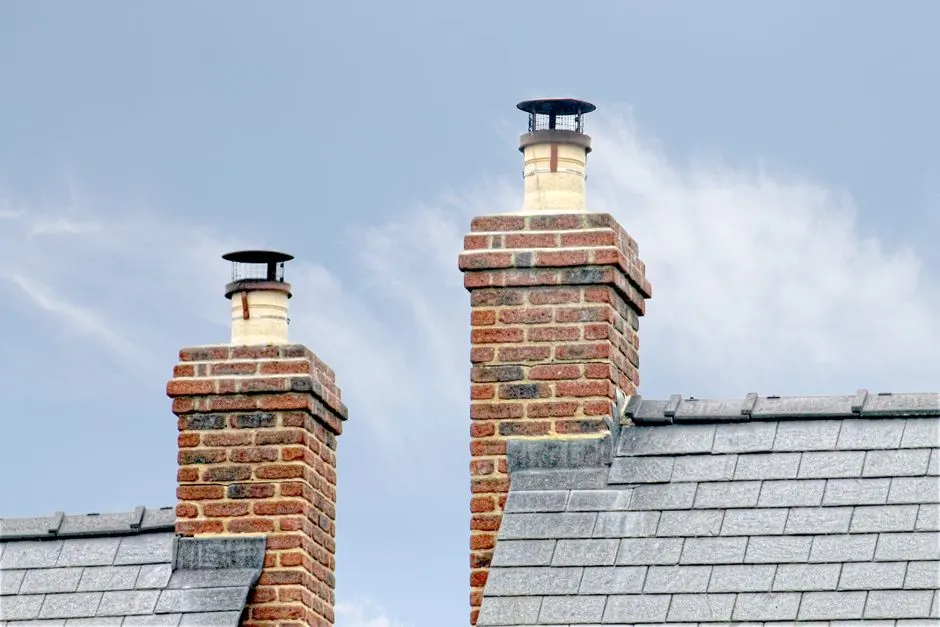
You can spot chimney crown damage by looking for hairline cracks, crumbling mortar, rust stains on the flue, and white mineral streaks running down the brick. Those four signs show up on almost every failing crown we inspect in Lawrence, and they usually appear months before water reaches your ceiling. Chimney crown damage signs Lawrence homeowners catch early are cheap to fix; the same cracks ignored for two winters turn into a $6,000 rebuild. This post walks through what to look for from the ground, what each sign actually means, and when a crack is still a repair job instead of a replacement.
What a chimney crown does and why it fails
A chimney crown is the concrete or mortar slab that caps the top of your chimney and sheds rainwater away from the flue and brick below. It is the first thing weather hits and the last thing most homeowners think about. When it works, water runs off the sloped edges and never touches the mortar joints underneath. When it fails, every storm pushes water straight into the chimney structure.
Most crowns in this part of New Jersey were poured with mortar rather than concrete, and mortar was never meant to sit in freeze-thaw cycles for decades. Lawrence sits in a climate that swings from 95°F in July to single digits in January, and that range is brutal on a thin slab. Water seeps into a hairline crack, freezes overnight, expands about 9% in volume, and widens the crack a little more each cycle. Two or three winters of that and a crack you could barely see becomes one you can slide a putty knife into.
We also see crowns that were built too flat, with no overhang past the brick. A crown should extend roughly 2 inches beyond the chimney walls and slope away from the flue. Without that overhang, runoff drips directly onto the top course of brick and eats the mortar joints from above. If you want a baseline on the rest of the system while you are up there, our team handles chimney inspection service in Lawrence, New Jersey and can document crown, cap, flashing, and liner condition in one visit.
The chimney crown damage signs Lawrence homeowners miss
Chimney crown damage in Lawrence usually shows up in five places, and only one of them is actually on the crown itself. The rest are downstream symptoms you can see from the driveway with binoculars.
- Hairline cracks across the top slab. Spider-web cracking is the earliest stage. If the crack is under 1/16 inch wide and the crown still slopes correctly, a flexible sealant coat often buys you several more years.
- Crumbling or flaking edges. When the outer 1 to 2 inches of the crown start to spall, the slab has already absorbed water. This is the point where patching stops working.
- Rust stains on the flue or cap. Brown streaks on a stainless cap or around the flue collar mean water is sitting where it should not. Rust on a cap is a crown or flashing problem roughly 70% of the time.
- White chalky streaks on the brick. That is efflorescence, mineral salts pushed out by water moving through the masonry. It almost always starts at the top and works down.
- Spalling brick on the top two or three courses. When the faces of the top bricks pop off, the crown has been leaking for at least a full season.
Any one of those signs on its own is worth a look. Two or more together means water is already inside the chimney.
What does chimney crown damage look like in Lawrence New Jersey?
Chimney crown damage in Lawrence New Jersey typically looks like a gray slab with dark, jagged lines running through it, often with a chalky white bloom around the edges and a rust-colored ring at the base of the flue. From the ground, the most obvious giveaway is a crown that no longer looks flat and uniform - it has dips, chips, or a visible gap where it meets the brick.
Get a pair of binoculars and stand about 30 feet back from the house. Look at the top of the chimney against the sky. What you want to see is a smooth, slightly domed cap that overhangs the brick on all four sides. What you do not want to see:
- A crack wide enough to catch a fingernail.
- Any spot where the crown has separated from the top course of brick.
- Moss or dark green staining on the crown surface, which holds moisture against the slab.
- A flue tile that sits lower than the crown, letting water pool around it.
Older homes in Downtown Lawrence and along the Route 206 corridor tend to have taller, narrower chimneys with small crowns, and those fail faster than the wider, lower stacks on newer construction. If your home was built before 1970, assume the crown has already been patched at least once.
How do I know if my chimney crown is damaged in Lawrence NJ?
You know your chimney crown is damaged in Lawrence NJ when you find any crack wider than a credit card, rust staining on the cap or flue, or water in the firebox after a heavy rain. Those three are the confirmation signs - the ones that mean the crown is no longer doing its job.
There is a simple test you can run from inside the house. After the next steady rain, wait a day and then check the firebox floor and the damper for dampness or a musty smell. Water in the firebox almost never comes from the roof; it comes from the crown, the flashing, or a failed cap. If the firebox is dry but you see stains on the ceiling near the chimney chase, the leak has been running for a while.
We also look at the crown from the roof itself, because the damage you can see from the ground is only part of the story. A crown can look intact from 30 feet and still be hollow underneath from years of freeze-thaw. Tapping the slab with a hammer handle tells you whether it rings solid or sounds dull and drummy. Dull means the concrete has delaminated, and no surface coating will fix that. When we find delamination, we usually move straight to chimney crown repair in Lawrence, New Jersey rather than trying to seal over a slab that has already failed internally.
How much does chimney crown repair cost in Lawrence?
Chimney crown repair in Lawrence runs from about $350 for a sealant treatment on minor hairline cracking up to $2,800 for a full crown rebuild with proper concrete, overhang, and a bonding agent. Typical 2026 pricing in this area lands around $600 to $1,200 for a crown that needs grinding, patching, and a flexible waterproof coating.
What drives the number:
- Access. A chimney you can reach from a low roof is cheaper than one that needs a ladder setup on a steep pitch.
- Crown size. A 30-inch by 30-inch crown uses far less material than a 48-inch by 48-inch one.
- Condition of the top courses. If the top two rows of brick are spalled, they have to come out before the new crown goes on. That adds masonry work.
- Flue height. The crown has to sit at least 2 inches above the flue tile. If the flue is short, we build that height into the new slab.
Compare that to the cost of ignoring it. Water that gets past a failed crown rots the damper, rusts the liner, and eventually shows up as a stain on your living room ceiling. At that point you are looking at $3,000 to $8,000 between relining, masonry repair, and interior patching. The crown is the cheapest thing on the chimney to fix and the most expensive thing to ignore.
Common mistakes that make crown damage worse
The single biggest mistake we see is sealing a crown that has already delaminated. A tube of masonry caulk over a hollow slab traps moisture inside and speeds up the failure. If the crown sounds drummy when you tap it, sealant is the wrong tool.
Other mistakes that cost Lawrence homeowners money:
- Using mortar instead of concrete for a rebuild. Mortar crowns fail in 8 to 12 years. A proper concrete crown with a 4-inch thickness and a sloped top lasts 25 or more.
- Skipping the overhang. A crown that does not extend past the brick lets water run down the chimney face and into the mortar joints.
- Painting the crown. Standard masonry paint traps water vapor. You need a breathable, flexible crown coating, not paint.
- Ignoring the cap. A crown and a cap work as a team. If the cap is rusted or missing, water hits the flue directly and the crown takes the overflow.
- Waiting until spring. A crack that opens in November will have gone through 40 or more freeze-thaw cycles by March. Fix it in the fall.
We see the cap-and-crown combination fail together more than any other pair on the chimney. If your cap is rusted through or missing, that is a separate fix from the crown, and our team handles chimney cap repair in Lawrence, New Jersey at the same visit so you are not paying for two trips up the roof.
Chimney crown damage prevention in Lawrence
Chimney crown damage prevention in Lawrence comes down to three habits: keep water off the slab, keep the slab flexible, and get eyes on it once a year. A crown that stays dry and slightly flexible can outlast the brick around it.
Here is the routine we recommend to homeowners in North Lawrence and across the township:
- Walk the property twice a year with binoculars. Once in late October before the first freeze, once in April after the last one. Look for new cracks, rust, or white staining.
- Re-coat the crown every 4 to 6 years. A flexible, breathable crown sealer costs a fraction of a rebuild and buys you another half-decade.
- Keep trees trimmed back. Branches that rub the chimney hold moisture against the crown and drop debris into the flue.
- Waterproof the brick below the crown. A breathable masonry water repellent stops the freeze-thaw damage that starts at the top and works down.
- Book a yearly inspection. A 20-minute look from the roof catches problems while they are still a $400 fix.
If you want the whole system on a maintenance schedule, our chimney maintenance in Lawrence, New Jersey plan covers crown inspection, cap check, flashing, and a flue scan every year, so nothing gets missed between visits.
When to call a professional
Call a professional when you find a crack wider than 1/16 inch, when the crown has separated from the brick, when you see water in the firebox, or when the slab sounds hollow under a tap. Those four conditions are past the DIY stage.
Small hairline cracks on a crown that still slopes correctly are fair game for a homeowner with a ladder and a tube of flexible crown sealer. Anything else needs a mason on the roof. The reason is simple: a crown repair done wrong - sealed over a delaminated slab, rebuilt with mortar instead of concrete, or poured without the proper slope - fails within two winters and you are back where you started, minus the money.
SootMenders works on chimneys across Lawrence and the surrounding Mercer County towns. We inspect the crown, tell you honestly whether it needs a coating, a patch, or a full rebuild, and do the work the same week in most cases. No guesswork, no upselling a rebuild on a crown that just needs a sealer.
Frequently Asked Questions
How do I know if my chimney crown is damaged in Lawrence NJ?
Look for cracks wider than a credit card, rust stains on the cap or flue, white mineral streaks on the brick, or water in the firebox after rain. Any one of those means the crown has failed. Two or more means water has been getting in for at least a full season.
What does chimney crown damage look like in Lawrence New Jersey?
It looks like a gray slab with dark jagged cracks, chipped or crumbly edges, and often a chalky white bloom around the rim. From the ground, the giveaway is a crown that no longer looks flat and uniform - it has dips, gaps, or a visible separation from the brick.
Who repairs chimney crown damage in Lawrence?
A licensed chimney mason with roof-access equipment. SootMenders repairs crowns across Lawrence and Mercer County, from sealant treatments on hairline cracks to full concrete rebuilds with proper slope and overhang. Most repairs are done in a single visit.
How much does chimney crown repair cost in Lawrence?
Expect $350 to $600 for a sealant treatment on minor cracking, $600 to $1,200 for grinding, patching, and coating, and up to $2,800 for a full rebuild. Typical 2026 pricing in Lawrence sits in the middle range for most homes.
Can I just patch a cracked chimney crown myself?
Only if the crack is under 1/16 inch wide and the slab still sounds solid when tapped. If the crown is delaminated, crumbly, or separated from the brick, a DIY patch traps moisture and makes the failure worse. That is a mason's job.
Get help with Chimney repair in Lawrence
If you have spotted cracks, rust, or white staining on your crown, we can take a look before the next freeze makes it worse. SootMenders handles Chimney repair across Lawrence and the surrounding Mercer County area, with honest assessments and same-week scheduling in most cases.
Call (844) 803-5147 and we will get eyes on your crown this week.